










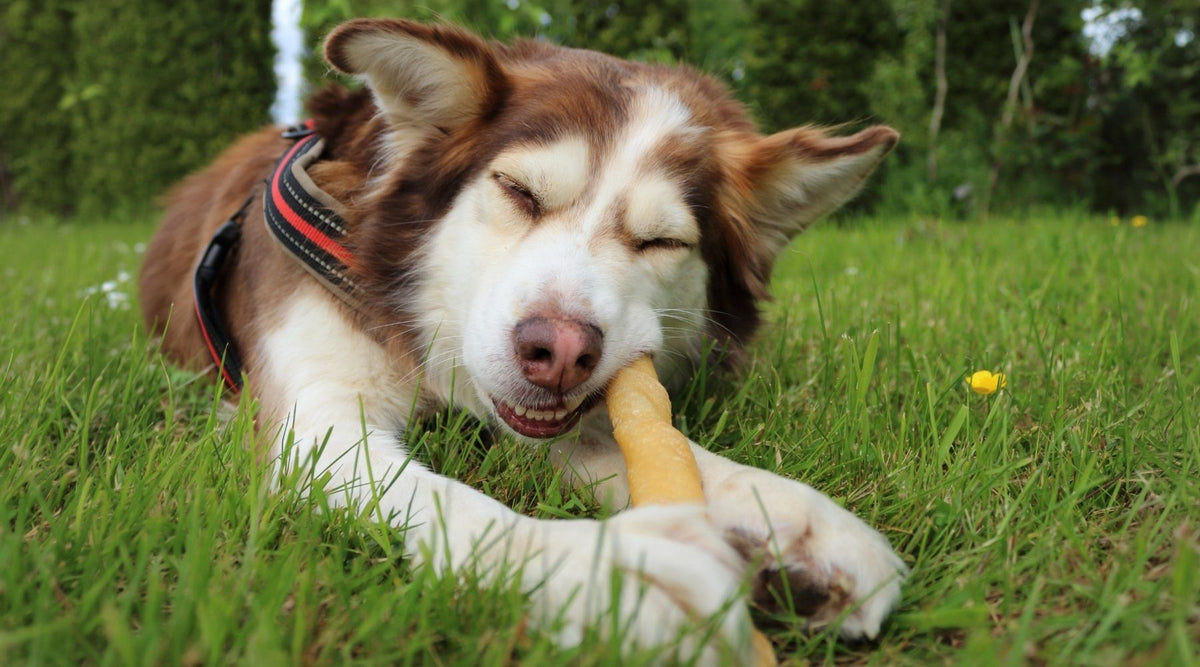
Perhaps you have watched your dog chew a bone with relish a hundred times. They take it between their paws, turn it occasionally, and chew on one side and then the other. But at some point, you notice something: something is different. Suddenly, your dog always holds their chew bone the same way and uses only one side of their mouth to chew.
Such a change can easily be overlooked. After all, your dog continues to chew and seems to enjoy their bone just as much as before. However, that is exactly the interesting point. Dogs do not necessarily stop an activity completely when they are in discomfort. Sometimes they simply change how they do something to put less strain on a sensitive or uncomfortable area.
Sensitive teeth, changes in the gums, or discomfort in the jaw area can therefore be possible reasons why a dog suddenly prefers to chew on one side. At the same time, one-sided chewing does not automatically mean that your dog has a toothache. Some dogs simply develop habits or prefer certain movement patterns.
In this article, we will explain when one-sided chewing can be completely unremarkable and when it makes sense to take a closer look. You will learn which changes to teeth, gums, and the jaw can influence chewing behavior, which additional warning signs are important, and why regular mouth care with our emmi-PET ultrasonic toothbrush can be useful not only for daily oral hygiene, but also for helping you notice changes in your dog's mouth sooner.
Why dogs may well have a preferred side when chewing
First of all, you should not assume there is a health problem every time you notice a preferred chewing side. Dogs have individual habits. Some prefer to carry their toys on a certain side, always lie down in the same direction, and develop certain movement patterns when chewing as well.
The decisive factor is therefore not so much the question of which side your dog chews on, but whether their previous behavior has changed.
If your dog has always held their chew bone mainly on the right and continues to chew in a relaxed manner, eats normally, and shows no other abnormalities, there is no cause for concern based on this habit alone. The situation is different if they used to use both sides and suddenly consistently use only one side.
Then a simple observation is worthwhile: Which side is being avoided? How does your dog behave with other chew items? What happens during normal eating? Do they use soft and hard objects differently? Do they drop the chew bone faster than before?
The hardness of the chew item can also make differences visible. Soft food requires significantly less mechanical stress than a hard chew item. Therefore, it may happen that a dog eats their normal meals without any apparent problems but changes their behavior during more intense chewing.
It is precisely these small differences that make everyday observations so valuable. After all, your dog cannot tell you, "This tooth feels uncomfortable when I bite down hard." Instead, they may show an adjustment in their behavior.
A newly developed one-sided chewing movement is not a diagnosis, but a change that you should take seriously. Therefore, observe not only the chew bone itself but the entire eating, chewing, and playing behavior of your dog. Often, it is only from several small changes that a picture emerges which shows you whether a closer inspection of the teeth, gums, and jaw is necessary.
What sensitive teeth, gums, and jaw have to do with it
If your dog suddenly only chews on one side, it may be because the other side feels uncomfortable for them. Chewing hard on a bone creates pressure on the teeth, gums, and jaw. Areas that are barely noticeable during normal eating can be subjected to significantly more strain.
A sensitive or damaged tooth is one possible cause. Small defects are not always immediately recognizable to you from the outside. Changes in the area of the tooth root can also cause discomfort, even if the visible part of the tooth initially looks unremarkable. Your dog may then try to protect the affected area and work on the chew bone increasingly with the opposite side.
The gums also play an important role. Bacterial plaque collects on the tooth surfaces and especially at the transition between the tooth and the gum. If the gums are irritated or inflamed, vigorous chewing can become uncomfortable. Redness, swelling, or bleeding can be signs that you should take a closer look.
In addition, the jaw comes into question as a possible cause. The chewing muscles and the jaw joint are significantly taxed during the intensive working of a chew bone. Discomfort in this area can cause your dog to avoid certain movements or always hold the object in the same way.
You should also keep foreign objects in mind. Small pieces of wood, plant parts, or other foreign bodies can get stuck in the mouth and cause localized discomfort.
However, do not try to deduce from the chewing behavior itself which tooth or structure might be affected. One-sided chewing initially only shows you that your dog may have changed their usual load. Why they are doing this cannot be determined with certainty through observation alone. That is exactly why it makes sense to view the behavior in the context of other abnormalities.
Which additional changes in everyday life can indicate a mouth problem
One-sided chewing becomes particularly interesting when other habits of your dog change at the same time. Some changes are obvious, others so small that they are quickly dismissed as quirks in everyday life.
Observe, for example, how your dog consumes their normal food. Do they continue to eat with the same appetite, but suddenly take longer? Does dry food fall out of their mouth? Do they pick up individual pieces and drop them again? Or do they seem to consciously avoid one side while chewing?
Changes can also be noticed while playing. Perhaps your dog does not carry their ball for as long, gives up more quickly during tug-of-war, or suddenly prefers soft toys. This does not necessarily have to be related to the teeth. If several of these changes occur together, however, a check of the mouth becomes all the more sensible.
Additionally, you can look out for some typical abnormalities:
- noticeably changed or unpleasant breath
- reddened or swollen gums
- blood on the chew item or toy
- increased drooling
- frequent smacking or licking of the lips
- sensitivity to touch on the muzzle or jaw
Changes to the teeth themselves also deserve attention. Visible plaque, discoloration, or a tooth that appears damaged should not be ignored.
It is important not to force your dog to undergo an extensive mouth check against their will. If the area is actually painful, even an otherwise calm dog can react unusually to being touched. Only look as far as your dog allows comfortably.
What is particularly significant is not a single symptom, but a change compared to your dog's normal behavior. You know their habits of eating, playing, and chewing best. If a dog that used to work their chew bone extensively from both sides suddenly becomes a consistent one-sided chewer, you may therefore take this observation seriously.
This does not mean that there is actually a dental problem. But it does mean that the teeth, gums, and jaw deserve a closer look.
When one-sided chewing should be clarified by a veterinarian
If your dog prefers to work on their chew bone on one side occasionally, you do not have to immediately assume there is a health problem. However, if this change persists or other abnormalities are added, the mouth should be examined by a veterinarian.
You should become particularly attentive if your dog suddenly only prefers soft food or soft chew items, repeatedly drops a chew bone, or flinches when biting down. Even if they do not want to chew vigorously despite visible interest, this can be an indication that certain movements or loads are uncomfortable.
Clearly reddened or swollen gums, bleeding, severe bad breath, increased salivation, or visible changes to individual teeth should also be clarified by a veterinarian. This applies in particular if your dog is also eating less, avoiding being touched on the head, or seems changed overall.
You should not be fooled by the fact that your dog continues to eat. Dogs can adapt their food intake surprisingly well to discomfort. They may swallow food faster, prefer to chew on one side, or choose other movement patterns. The fact that a dog is still eating does not automatically mean that their teeth and gums are healthy.
A veterinary examination is also important because you can only assess part of the mouth at home. Not every change is visible to the naked eye. Problems can, for example, lie below the gum line or in the area of a tooth root. The diagnosis therefore always remains the preserve of the veterinarian.
Until it is clarified, you should not encourage your dog to chew on particularly hard objects. If they clearly show that a certain load is uncomfortable for them, this reaction should be respected and not tested by further chewing.
How regular mouth care helps to notice changes sooner
Ideally, you should not wait until your dog's chewing behavior changes before dealing with their teeth. Regular mouth care can help support long-term oral health and at the same time offer a great practical advantage: you get to know your dog's mouth better.
If you see the teeth and gums regularly, you will notice sooner if something changes. You know what the gums usually look like, what discolorations have been present for a long time, and whether an area suddenly appears different than usual. Such a routine does not replace a veterinary check-up, but it can help to notice abnormalities earlier.
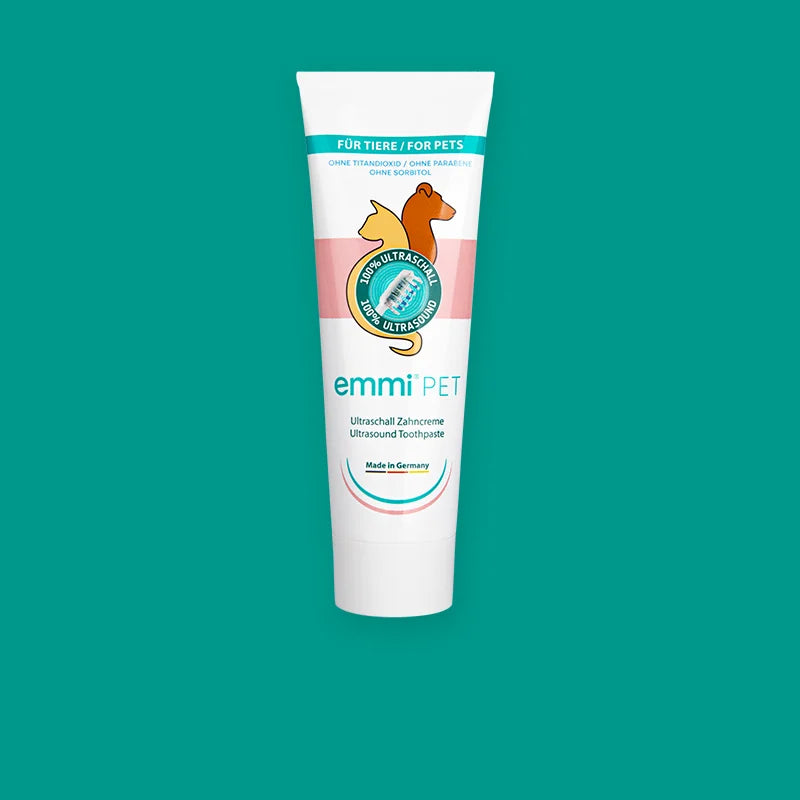
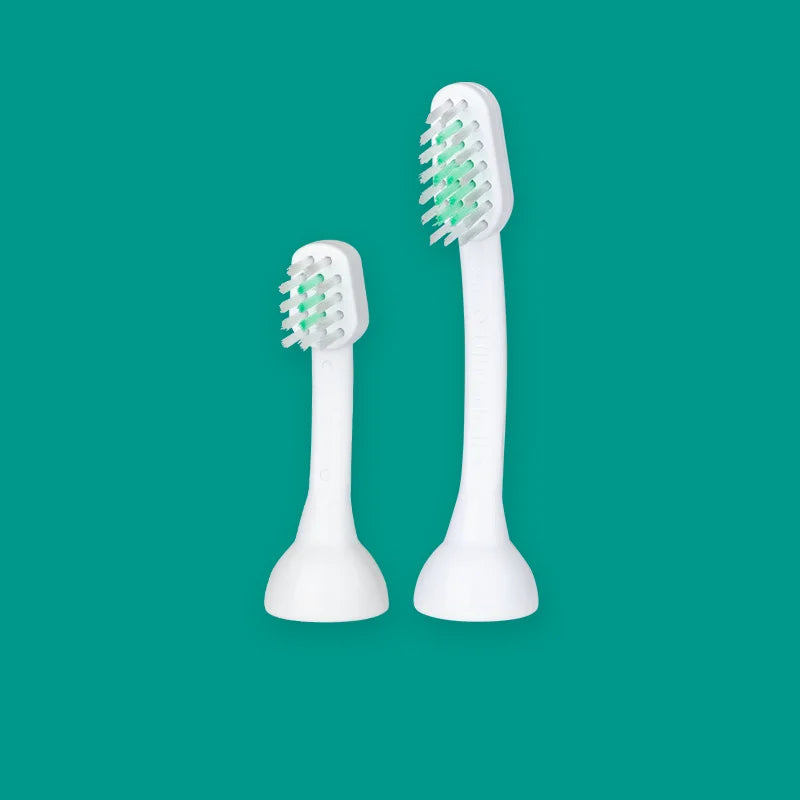
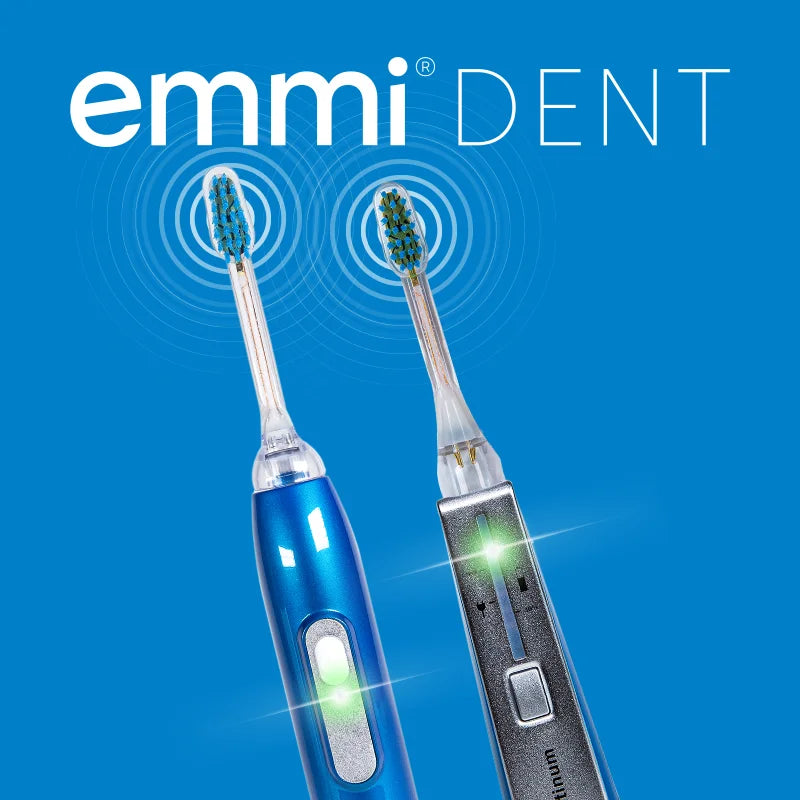
Our emmi-PET ultrasonic toothbrush can be part of this regular care routine. It can help reduce bacterial plaque and supplement your dog's daily oral hygiene. The regularity is crucial here. Dental care should not begin only when complaints arise, but should be as much a matter of course as possible in everyday life.
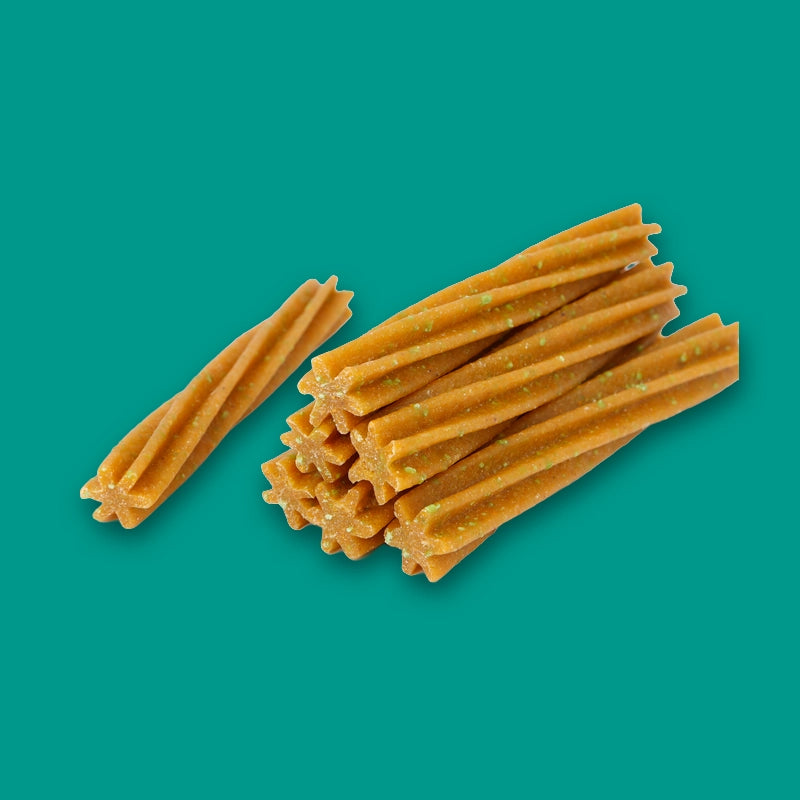
Especially for a dog that likes to use chew bones or other chew items, the combination of observation and care makes sense. Chew items can provide occupation and satisfy a natural chewing need. However, they do not replace targeted dental care or regular veterinary check-ups.
At the same time, you should pay attention to an appropriate consistency when selecting chew items. Very hard objects can put a lot of strain on the teeth. If your dog suddenly avoids a certain chew item or only works on it very cautiously, it is more sensible to look for the cause than to keep offering them the same object.
The fact that your dog suddenly only holds their chew bone on one side seems like a small quirk at first. If this behavior develops newly, however, it can be a valuable hint. One-sided chewing is not a diagnosis, but a change that deserves a closer look at the teeth, gums, and jaw. Therefore, observe how your dog eats, plays, and carries other objects as well. With regular mouth care, attentive observation, and veterinary check-ups, you can contribute to recognizing changes early on and accompanying your dog's oral health in the long term.