



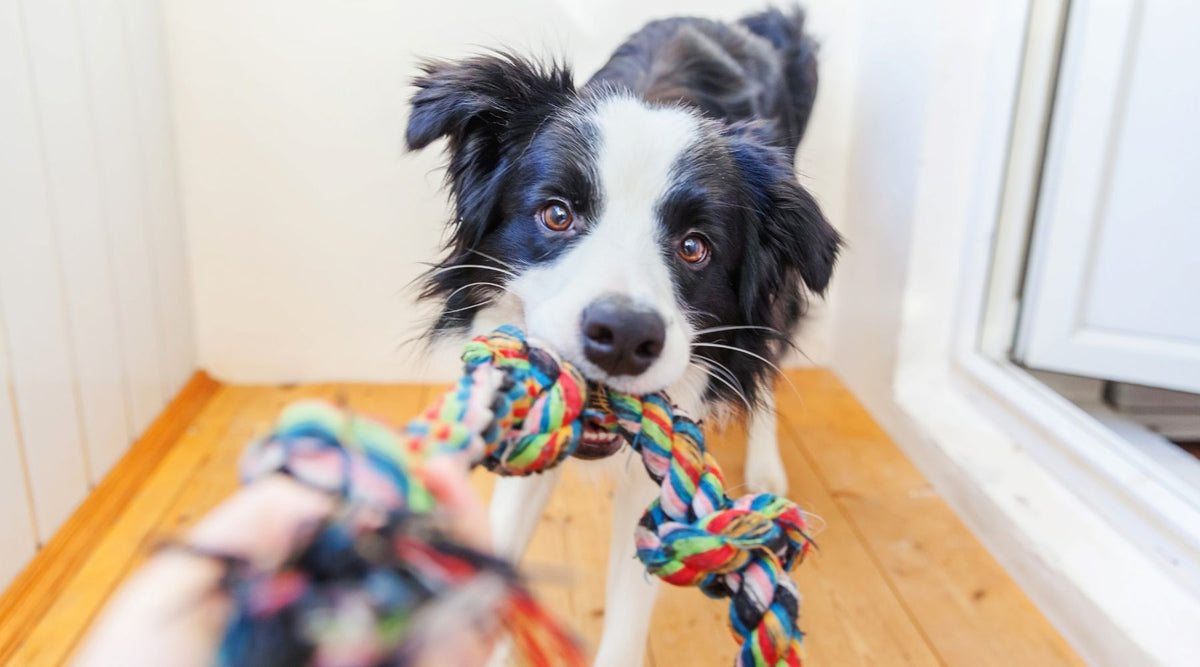
Perhaps you recognize this situation: Your dog used to run around the garden for minutes with their favorite toy, tugged enthusiastically on the rope, or brought the ball back again and again. Lately, while they still take the toy into their mouth, they drop it after just a few seconds. Perhaps they even continue to play, but no longer want to carry the toy for as long or tug on it as vigorously as they used to.
Such small changes are easy to overlook in everyday life. After all, your dog is still playing and otherwise seems completely normal. Nevertheless, it is worth taking a closer look. Changed play behavior can be an early sign that something has changed in the mouth, teeth, or jaw area. Dogs, in particular, do not always show discomfort obviously. They often adapt their behavior first.
In this article, we explain why your dog might suddenly drop their toy sooner, what role teeth, gums, and the jaw play, and which additional changes you should watch out for. You will also learn why regular oral care can help you notice changes early and support your dog's long-term oral health.
Why your dog's play behavior may suddenly change
For many dogs, playing is far more than just a pastime. Carrying a ball, tugging on a rope, or chewing on a favorite toy puts significant strain on the teeth, jaw, and chewing muscles. As long as everything feels comfortable, this strain is barely noticeable. However, if something changes in the mouth, this same activity can suddenly become unpleasant.
Your dog does not necessarily have to stop playing completely. That is precisely what makes such changes easy to miss. A dog with discomfort may continue to run enthusiastically to the ball, pick it up, and bring it to you. Perhaps they just drop it sooner. During a tug-of-war game, they might give up more easily or no longer carry a toy through the house for minutes at a time.
When experiencing discomfort, dogs often first avoid specific movements or pressures rather than stopping an activity entirely. This can explain why small changes in play behavior can be among the early signs that something has changed.
Of course, not every shorter play session is caused by a dental problem. Age, fatigue, temperatures, stress, or simply changing interests can also influence how intensely your dog plays. The decisive factor, therefore, is the comparison with their normal behavior.
If your dog previously carried a ball enthusiastically for ten minutes and now regularly drops it after a few seconds, you should not simply dismiss this change as a new quirk. It becomes particularly interesting if other abnormalities are added. Perhaps your dog chews differently, prefers one side of their mouth, or suddenly stops playing with certain chew toys.
It is precisely these small observations that can help you notice changes early. Because no one knows your dog's daily habits as well as you do.
The role of teeth, gums, and the jaw in playing
When your dog carries a ball, chews on a toy, or holds on firmly during a tug-of-war game, their entire mouth area is at work. The teeth grip the toy, the jaw holds it in place, and the chewing muscles ensure your dog can exert the necessary pressure. At the same time, the gums and other structures in the mouth are subjected to different levels of strain depending on the shape and texture of the toy. Even small changes can therefore lead to a familiar game suddenly feeling uncomfortable.
One possible cause can be sensitive teeth. A damaged tooth or changes in the area of the tooth root are not always recognizable to you from the outside. Irritated gums can also be uncomfortable when holding or chewing. Bacterial plaque forms continuously on tooth surfaces and can impair oral health if not reduced regularly.
The jaw itself should also not be overlooked. Particularly intense tug-of-war games or the persistent carrying of heavy objects place strain on the chewing muscles and the jaw joint. Tension, overload, or other discomforts can lead to your dog still wanting to pick up their toy, but no longer holding it for long.
It is interesting to note how skillfully dogs can adapt their behavior. Instead of obviously showing that something hurts, they may simply reduce the duration of an unpleasant strain. The favorite toy remains interesting, but is dropped sooner.
Therefore, the change itself is often more important than the mere duration of play. If your dog has always only walked around with a toy for a short time, there is no cause for concern for that reason alone. However, if a dog suddenly changes a behavior they have been accustomed to for months or years, closer observation is worthwhile.
Small warning signs you can observe in everyday life
Carrying a toy for less time alone does not tell you much about the cause. The observation becomes more meaningful if you compare your dog's behavior in other situations. After all, teeth and jaws are not only used when playing, but also when eating, chewing, and during daily oral care.
For example, pay attention to whether your dog still picks up their food in the same way as before. Do they chew on both sides, or do they seem to prefer one side? Are hard chew treats suddenly left behind, even though they were particularly popular before? Perhaps you also notice that your dog smacks their lips more often, licks their lips, or paws at their snout.
The game itself also provides clues. If your dog still likes to take soft stuffed animals into their mouth, while hard balls suddenly become uninteresting, the texture of the toy may play a role. If they give up unusually quickly during a tug-of-war game or drop an object as soon as greater pressure is applied, you should also take a closer look.
Another important point is bad breath. Noticeably unpleasant breath is sometimes viewed by pet owners as a normal side effect in dogs. In fact, changes in breath odor can be related to problems with teeth or gums. Reddened gums, visible plaque, or noticeable discoloration on individual teeth also deserve attention.
You don't have to perform a detailed examination every day. It is much more valuable to know your dog's normal habits. Early changes are particularly noticeable when you know what is normally typical for your dog.
Not every one of these observations automatically means that there is a medical condition. However, if several changes occur at the same time or if the play behavior changes permanently, the cause should be clarified by a veterinarian. This makes it possible to determine whether the teeth, gums, or jaw are actually involved or whether something else entirely is behind the changed behavior.
When you should have changes clarified by a veterinarian
If your dog drops their toy faster than usual once, there is of course no reason to worry. Perhaps they are tired, the weather is warm, or they simply don't feel like a longer play session. It's a different story if their behavior changes permanently or if other abnormalities appear.
You should be particularly attentive if your dog suddenly flinches when picking up or holding a toy, chews only on one side, or consistently avoids certain toys. Visible changes in the mouth, clearly reddened gums, bleeding, bad breath, increased salivation, or difficulties eating food should also be clarified by a veterinarian.
This also applies if your dog suddenly finds it unpleasant to have their snout or jaw touched. In this case, do not attempt to examine the mouth in detail yourself against their resistance. Pain can cause even an otherwise balanced dog to react unexpectedly.
Only a veterinarian can determine whether a dental problem, a change in the gums, an injury, or another cause is actually behind the changed play behavior. Not all changes in the mouth are visible from the outside. Problems below the gum line or on tooth roots, in particular, may require a professional examination and, if necessary, further diagnostics.
For you, this does not mean interpreting every small change as a disease immediately. Rather, it is about taking new behaviors seriously and looking at the overall picture. The better you know your dog's normal habits, the easier it is to recognize when something has actually changed.
How regular oral care can support your dog
Ideally, awareness of oral health should not begin only when your dog drops their toy or shows other abnormalities. A regular grooming routine gives you the opportunity to engage with your dog's teeth and gums again and again, potentially noticing changes earlier.
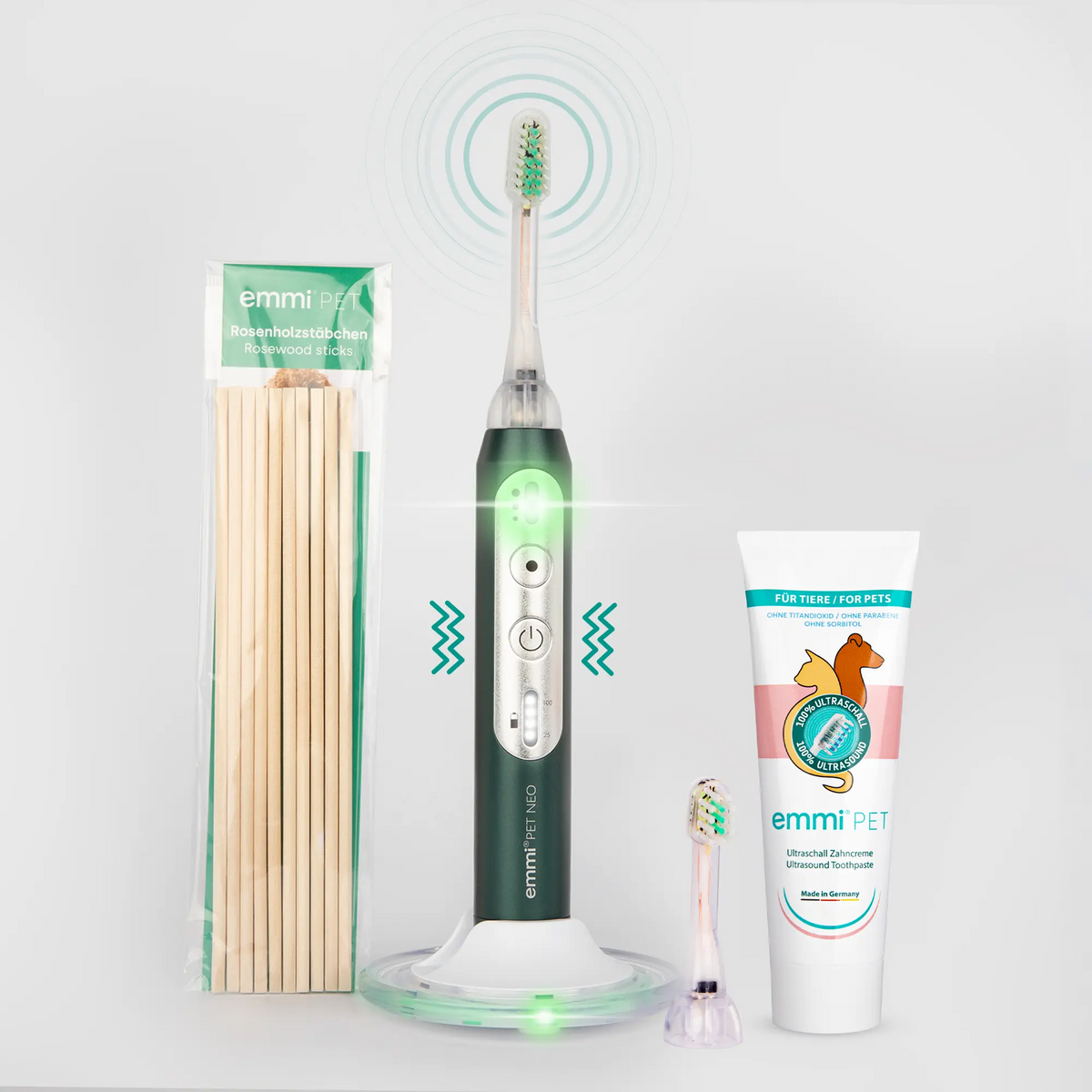
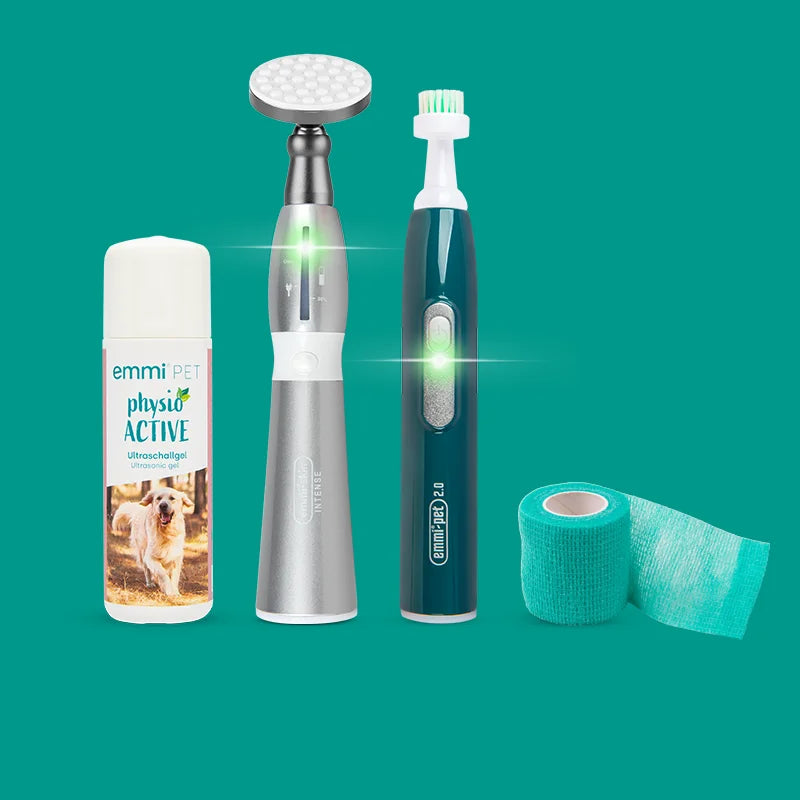
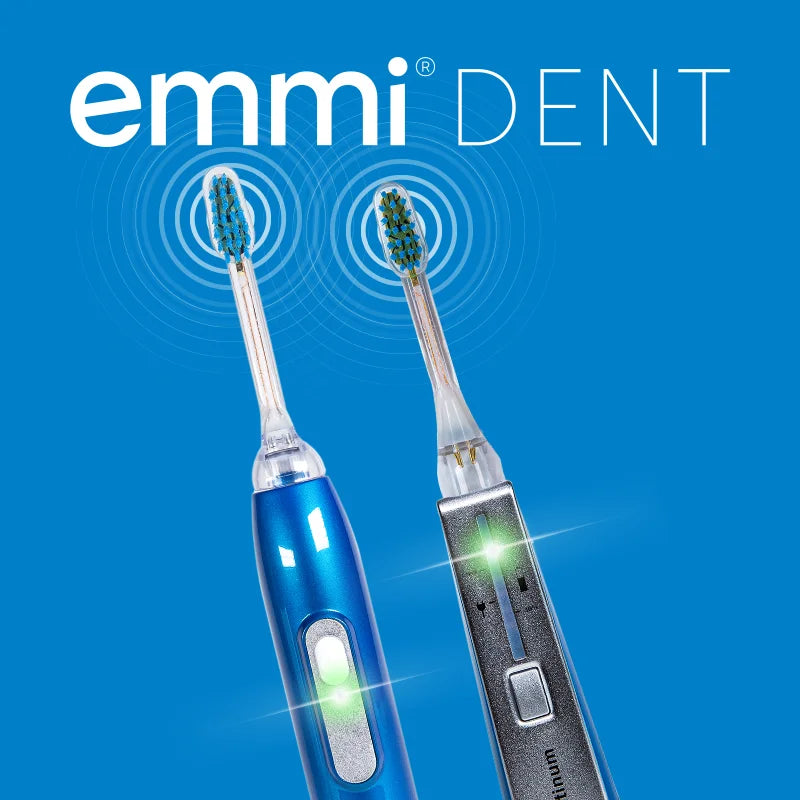
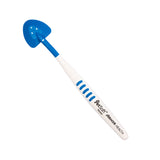
Bacterial plaque forms regularly on tooth surfaces. Therefore, dental care is not a one-time matter, but should be a matter of course in everyday life. Our emmi-PET ultrasonic toothbrush can be part of a regular grooming routine and help to reduce bacterial plaque and support oral hygiene.
An additional advantage of a fixed routine lies in observation. If you deal with your dog's mouth regularly, you are more likely to know what their teeth and gums normally look like. Changes can thus catch your eye more quickly. However, home dental care does not replace regular veterinary check-ups or necessary treatment. Grooming and veterinary care complement each other but perform different tasks.
It is also worth taking a conscious look when choosing toys. Extremely hard objects can place great strain on teeth. Toys should be suitable for your dog's size, biting power, and individual play behavior. If you notice that your dog suddenly avoids certain materials, you should not encourage them to continue playing, but first observe why their preferences have changed.
The fact that your dog suddenly drops their favorite toy sooner initially seems like a small change. However, details like these can provide valuable clues. Perhaps your dog is simply not as playful as they used to be. Or perhaps carrying, chewing, or holding onto the toy for longer just doesn't feel comfortable anymore. Changes in habitual behavior are therefore not a diagnosis, but a good reason to take a closer look. With attentive observation, regular oral care, and veterinary check-ups, you can help to detect changes early. And in the best case, nothing will stand in the way of a long, enjoyable round with their favorite toy again soon.