






Spring feels like a fresh start. And that is exactly what our dogs notice, too. Suddenly, walks get longer, the coat changes seemingly overnight, and the daily routine gains more momentum. As lovely as that is, it can quickly become chaotic if you try to do everything at once. Grooming needs to get done, more exercise is on the agenda, and somewhere in between, you don’t want to lose sight of dental care.
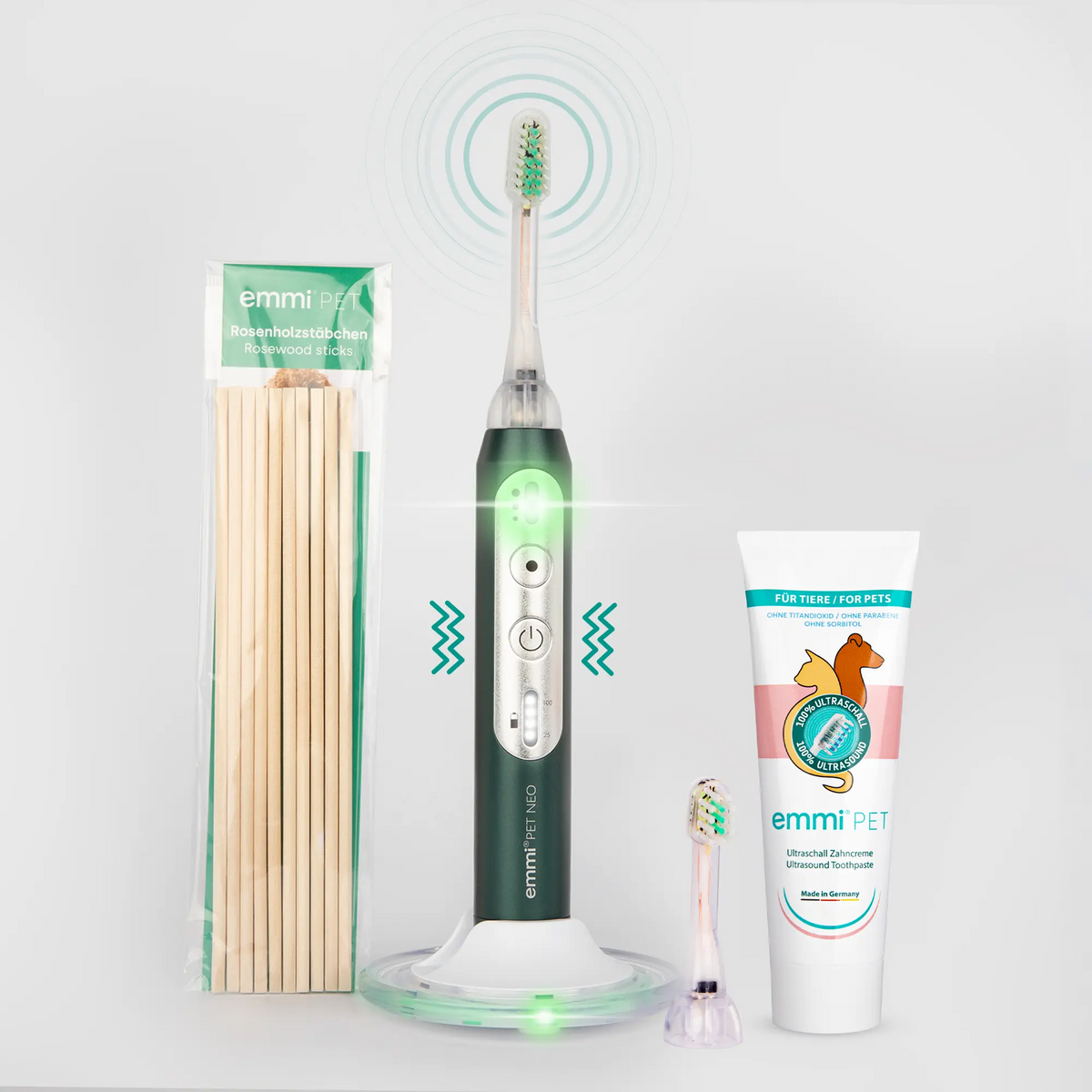
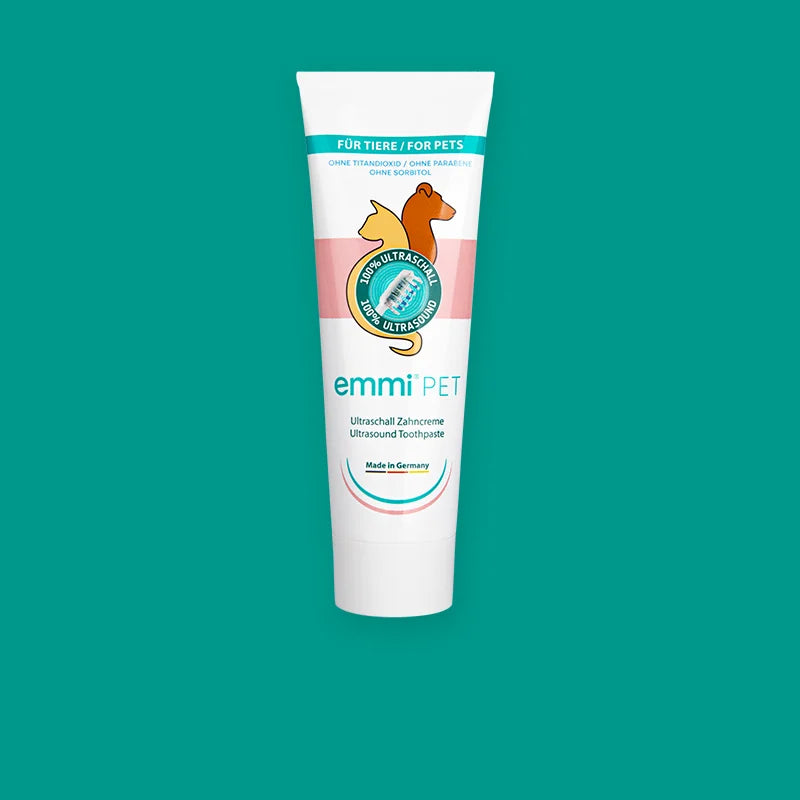
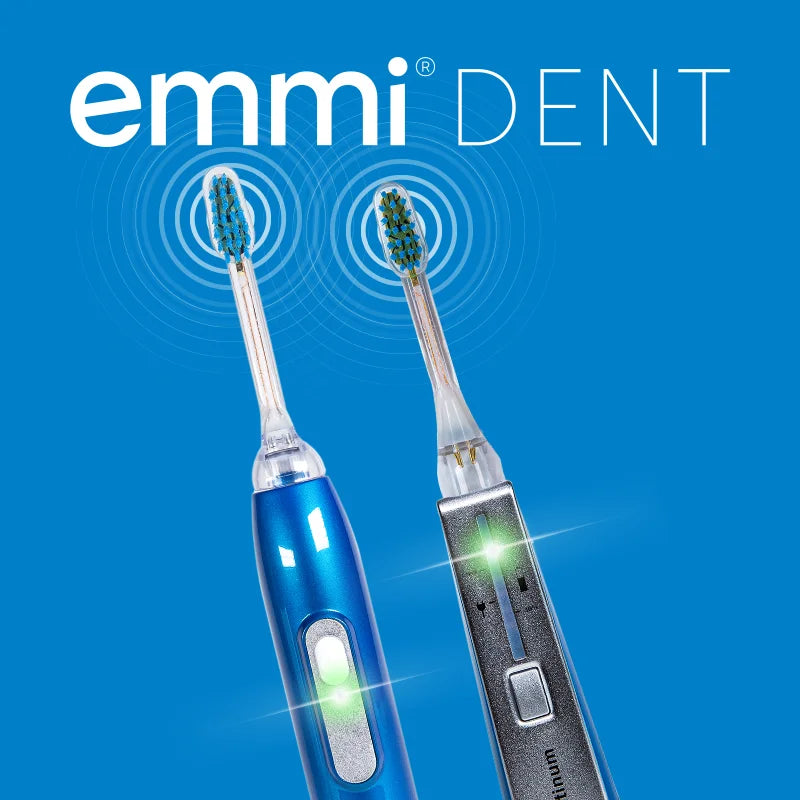
In this article, we explain how to build a spring routine that truly helps you. A routine that combines grooming, exercise, and dog dental care in a way that remains manageable. You will get practical, everyday building blocks that fit into your daily schedule without feeling like a chore. We will also show you how to gently integrate oral health into your evening, for example with our emmi-pet ultrasonic toothbrush and the Happy DENT Spray as a supplement.
Why spring is more than just nice weather for dogs
Spring brings not only warmth but also new stimuli. More smells, more encounters, more surfaces, more little adventures. At the same time, the body is working in the background. Shedding can challenge the skin. Increased activity puts demands on muscles and joints. And the mouth often has more to do in spring because there is more chewing, carrying, and snapping going on outside. Many dogs seem "like a different animal" during this time. And that is exactly where the challenge lies: the mind and motivation are sometimes faster than the body.
A good spring routine helps you channel this energy in a direction that feels good to your dog. It ensures that you cover the most important points regularly without constantly feeling like you have to do everything perfectly. Routine doesn’t mean strict; routine means relief.
The common thread: Less perfection, more rhythm
Before we dive into the individual building blocks, here is the most important basic idea. A spring routine works not by adding more tasks, but by better sequencing. Many owners try to increase everything at the same time: more sport, more training, more grooming. And then they wonder why the dog becomes more restless, why the skin seems more sensitive, or why the mouth suddenly becomes an issue. Often, the solution is to build a rhythm that balances the workload.
Think of spring like a week where some days can be more intense and others quieter. A day with lots of movement, then a day with a slightly slower pace. A day with a long walk, then a day with more sniffing instead of sprinting. And in between, short grooming rituals that aren’t elaborate, but are regular. Exactly these small repetitions make the difference in the end.
Gently supporting coat and skin in spring
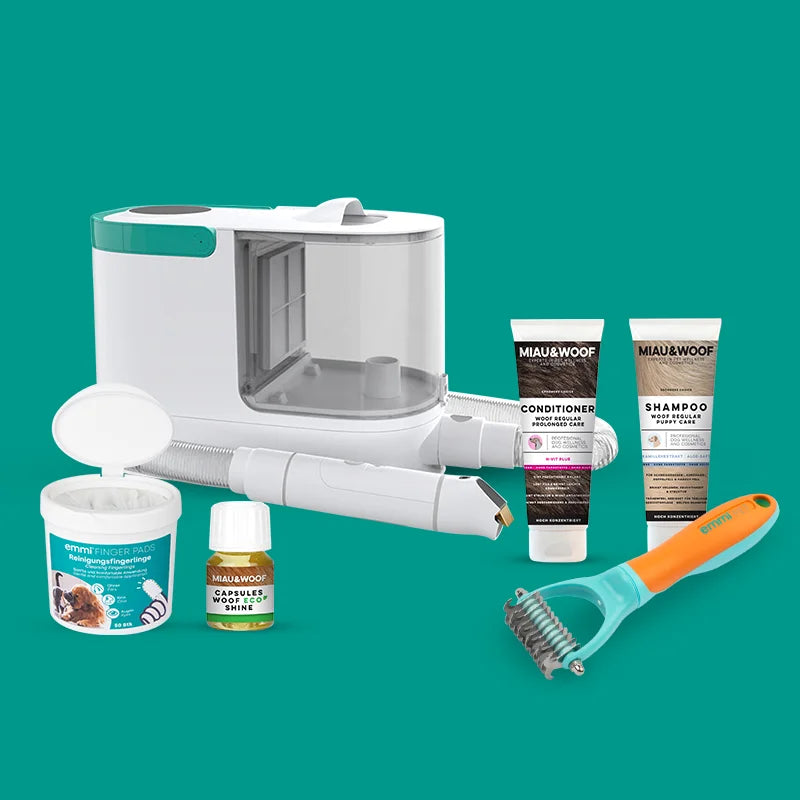
Consistency helps during shedding. It is better to brush briefly and frequently than rarely and then too intensely. If you try to "pull everything out" once a week, it is exhausting for many dogs and not always pleasant for the skin. Short sessions, on the other hand, act like small relief steps. You loosen the undercoat, reduce matting, and make the coat more permeable overall. By the way, this also has a nice side effect. If you brush regularly and care for the coat with our Grooming Kit Home & Pro, you will notice changes faster. Small skin spots, dandruff, irritation, parasites. You see them sooner and can react more quickly.
Pay attention to timing when brushing. Many dogs are easy to groom after a walk because they have already wound down a bit. Others prefer it in the evening when the day is over. And if your dog becomes restless during this, it is not a sign that they "don't like grooming." It is often a sign that it is too much at that moment. Then, less pressure, a smaller area, or a different time helps. Grooming works best when your dog doesn't have to endure it, but feels good about it.
However, a quick paw check is always worth it after walks. More things get stuck in the spring. Small pebbles, thorns, wood fragments, pollen, mud. Many dogs react to this by licking, and you quickly end up in a loop. Dog licks, paw becomes irritated, dog licks more. A quick check often saves a lot of trouble. And if you use paw care products, it is a nice moment to keep the skin supple without over-treating it.
Dosing exercise wisely instead of just doing more
More exercise is great. But the body sometimes needs a transition. After winter, muscles and coordination are not automatically at a summer level, even if your dog would love to start immediately. The most common problem in spring is not the exercise itself, but the jump in intensity. Suddenly, long distances again, sprints again, wild play with quick changes of direction again. And then you wonder why the dog is stiffer the next morning or seems tired more quickly.
You don’t have to create a sports program for this. It is often enough to make the walk more conscious. More steady walking, short trotting sections, quiet sniffing in between. If you do dog sports, the same thought applies. Better to keep a session slightly shorter but well-structured than to overdo it once. And if you notice that your dog is particularly "working" on meadows or sand, take that as a hint. Soft ground is brilliant for training, but heavily challenges the stabilizing muscles. Building up means providing a stimulus and then allowing for recovery.
Dog dental care as a mini-ritual in the evening
Dental health is easily underestimated in spring because so much else is happening. Yet it is often exactly the season when plaque becomes noticeable more quickly. More treats, more chewing behavior, more snacks on the go, more sticks, more grass, more of everything. And if oral care is neglected in everyday life, the environment in the mouth shifts faster than one might think. The breath becomes stronger, the gums appear more sensitive, and eventually, you stand there and think: when did that happen?
Dog dental care works best when it remains small. Two to three minutes, calmly, without pressure. You don't have to run through a perfect program every evening. You need a routine that you can maintain. Many owners fail not because of lack of insight, but because the dog doesn't like it or because it feels stressful. That is exactly why the introduction is so important. First, just lift the lips briefly, then touch only two teeth, then take a break. This is how your dog learns that dental care is not an "intervention," but a normal part of your evening.
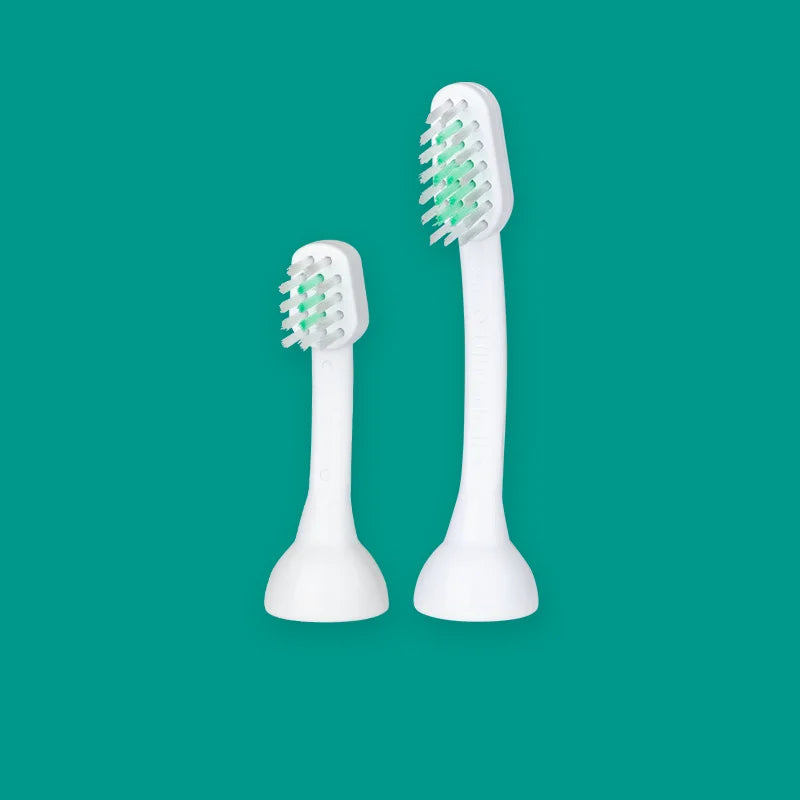
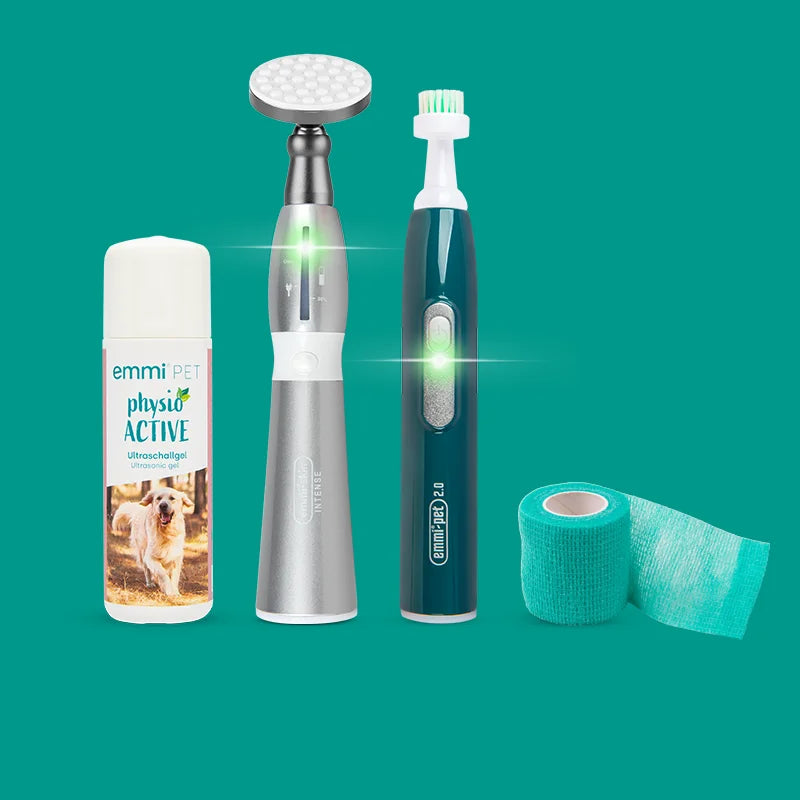
For the cleaning itself, our emmi-pet ultrasonic toothbrush can be a practical aid because you can work very quietly and don't have to scrub. This is not a promise that it will solve everything. But it is an advantage in daily life because many dogs accept gentle application more easily.
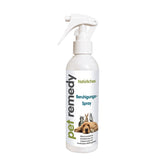
The Happy DENT Spray can be a supplement if you want to support oral freshness in between, for example on days when you were out a lot or the evening is getting late. It is important to categorize it correctly: A spray does not replace dental care. However, it can be a building block that rounds out the routine if you use it sensibly.
How to really get the routine into your daily life
The difference between "I want to" and "I do" is usually a fixed moment. Many find it after the last walk. The dog has been outside, the dog is calmer, and you are in evening mode too. That is exactly where a mini-routine fits in. First, check the paws briefly, clean them if necessary. Then provide water so your dog can drink. And after that, when it fits, a short moment for dog dental care. Not as a major ritual, but as a quiet conclusion.
If you have a family or there is a lot going on, a very simple trick helps: Don't do everything every day. Grooming doesn't need to be long every day, but it should be regular. Exercise can be varied. Dental care is ideally frequent, but if a day slips, it's not the end. The important thing is that you resume the next day without a guilty conscience. Routine thrives on resumption.
Why routine doesn't solve everything and when you should seek advice
As helpful as a spring routine is, it has its limits. If your dog already has dental problems, if they show signs of pain, if the gums are bleeding, or if the breath is consistently very bad, a routine at home is often not enough. Dog dental care supports oral hygiene, but it does not replace diagnostics. If you notice changes, have them checked by a vet.
This also applies to exercise. If your dog limps repeatedly, is noticeably stiff, or suddenly cannot handle physical activity, a check-up is sensible. Spring is great, but it is also the season when overexertion becomes visible. Better to have it checked once too early than too late. That isn’t fear; that is care.
To help you get through spring well
A good spring routine does not feel like a duty, but like a relief. You brush briefly and regularly instead of too much all at once. You increase exercise consciously instead of overwhelming the body. And you turn dog dental care into a small evening ritual that isn't annoying but gives you stability.
During shedding, spring feels like a little spring cleaning from the inside for many dogs. There is hair everywhere, the undercoat is stuck, and at the same time, the skin can react more sensitively than usual. That is exactly why it is worth not just doing grooming "somehow," but seeing it as a calm routine that truly provides relief. If you brush regularly and gently remove loose hair, the coat becomes airier, the skin can "breathe" better, and you will also find small spots that need attention more quickly along the way. You can find suitable grooming components in our emmi-pet grooming collection, which you can integrate sensibly into your spring cleaning according to coat type and needs.
If you want to make it easy on yourself, think in small steps. Keep an eye on the coat and paws after the walk. Keep exercise balanced with rest periods. And handle dental care gently and consistently, for example with our emmi-pet ultrasonic toothbrush and the Happy DENT Spray as a complementary building block, if it fits into your daily routine.